Designing the shape of an implant or an implant line, an abutment or a bridge, etc.,means combining materials science, precision engineering, and clinical practice.
Only through a multidisciplinary approach can we obtain a range of products capableof responding to different anatomical, surgical, and prosthetic needs, while ensuringsafety and precision.
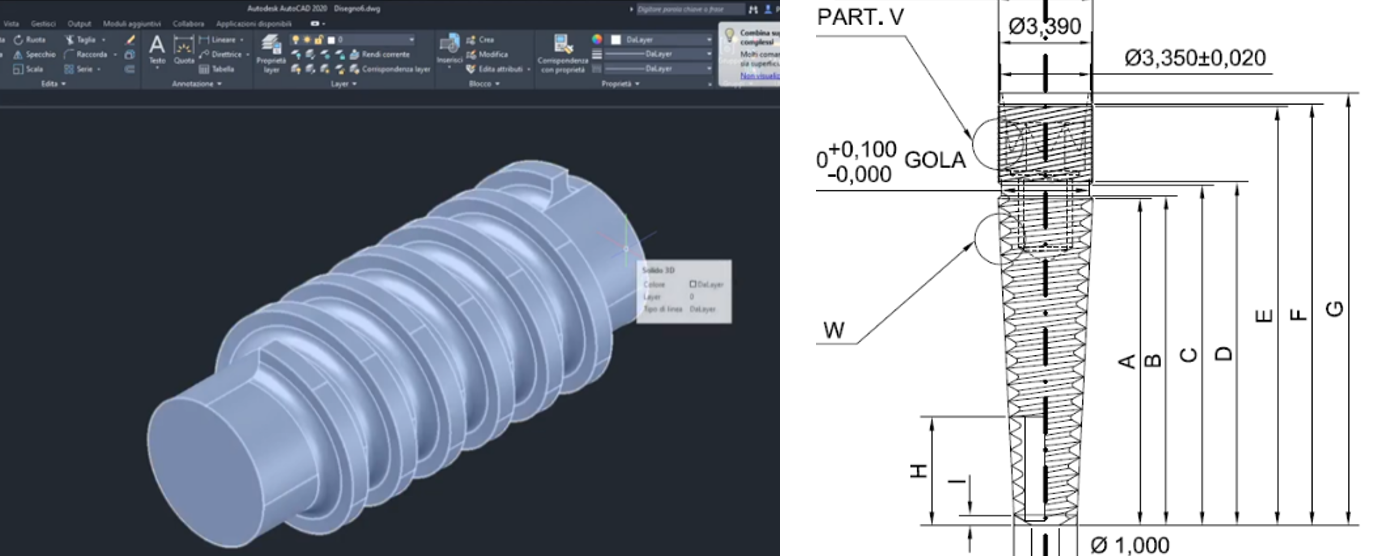
We use dedicated software to model the implant’s geometry.
• The following are defined: thread, internal/external connection, threads, prostheticplatform, etc.
• The design is conceived to ensure osseointegration and optimal distribution ofmasticatory loads.
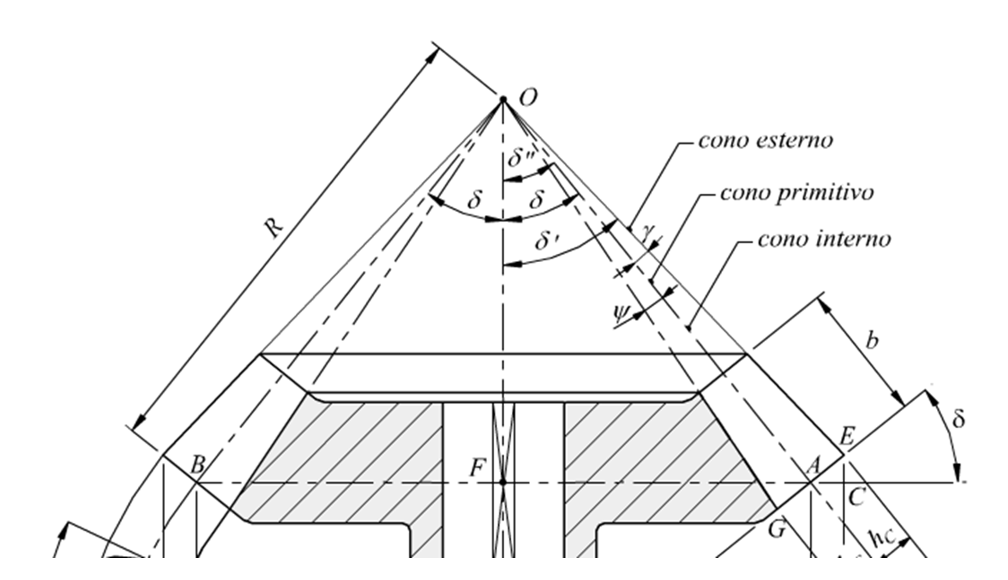
• Technical tables are produced with orthogonal views, cross-sections, and millimetricdimensions with centesimal tolerances
. • Each component (screw, abutment, etc.) is represented with tolerances andproduction specifications.
PRODUCTION OF EXCELLENCE
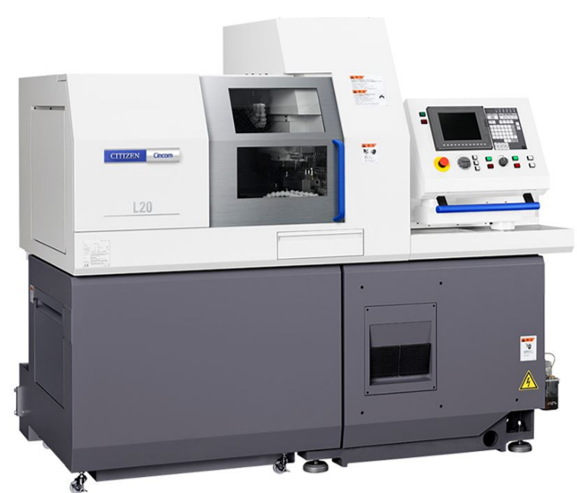
Easyfor products are manufactured using state-of-the-art machinery, such as 9-axissliding headstock lathes or 5-axis milling machines, which ensure superior precisionand quality. CNC programs, specifically developed for dental machining, ensureadaptability to the needs of the industry and the manufacture of each componentwith care and attention to detail.
MATERIAL SELECTION
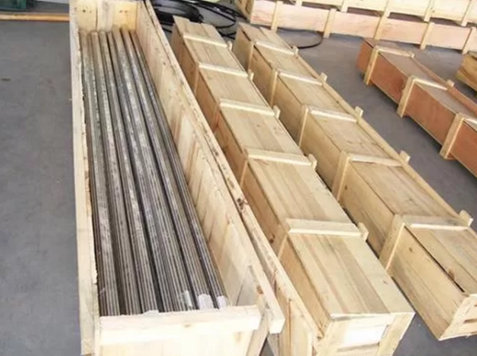
In dental implant manufacturing, material selection is a key factor in determining the implant’s performance and longevity. Materials such as titanium alloys are preferred for their excellent biocompatibility and high strength. Designers carefully select the most suitable material based on the type of product being manufactured.
Strict Dimensional and Quality Controls
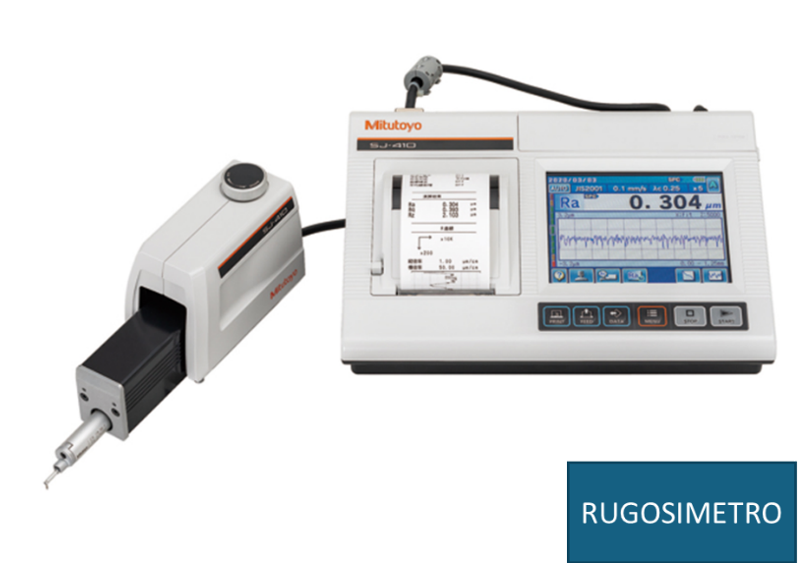
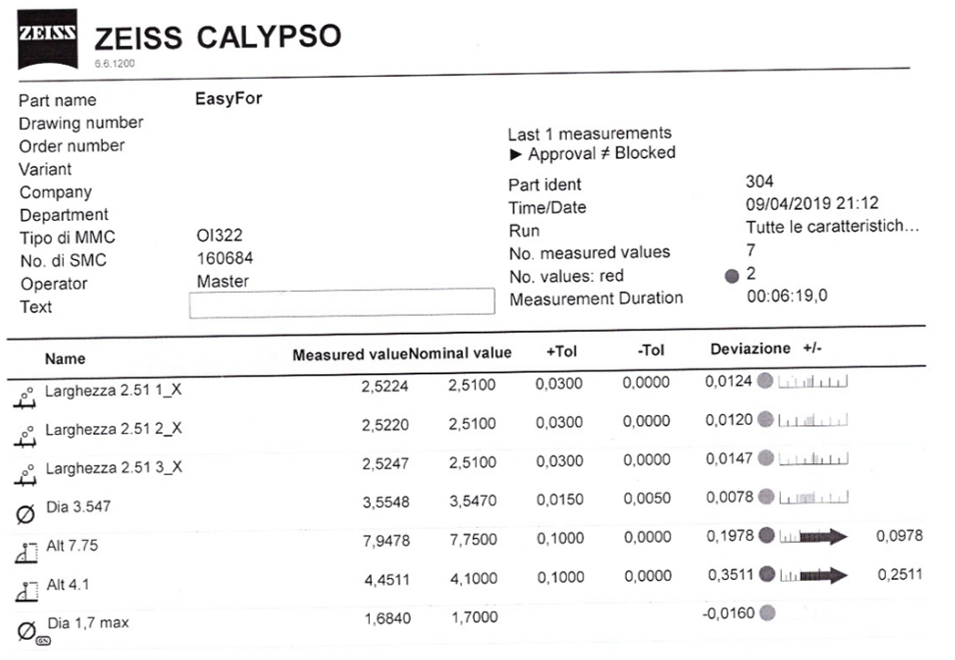
At Easyfor, quality is a top priority. Each product undergoes meticulous dimensional checks, both during production and before packaging. The use of advanced machinery and tools allows us to detect and correct even the smallest imperfections. The result is consistent and reliable production, guaranteeing excellent systems for industry professionals.
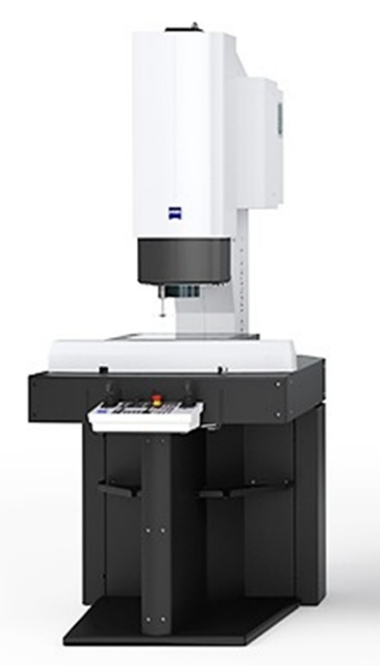
MACCHINA DI MISURA MULTISENSORE
ZEISS O-INSPECT
SURFACE TREATMENT AND DOCONTAMINATION
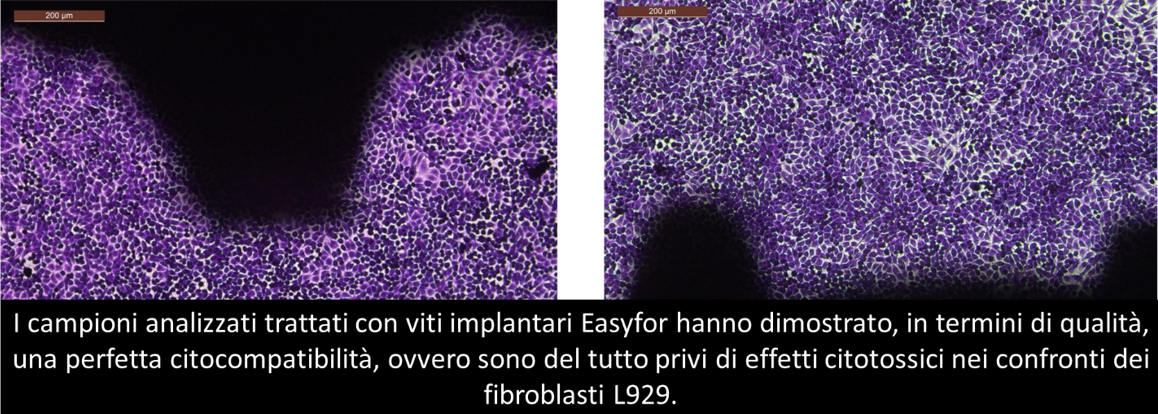
Easyfor entrusts Nobil Bio Ricerche with the decontamination and treatment processes of implant surfaces, guaranteeing high standards of safety and performance.
Treatment processes
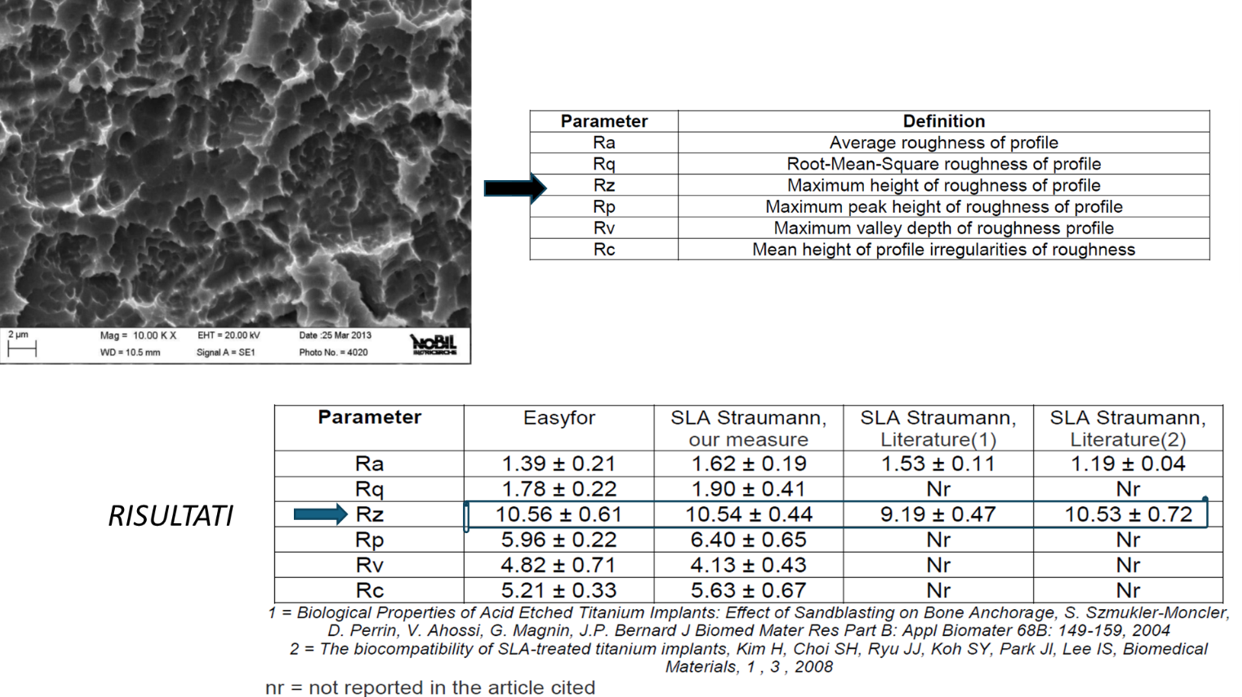
• Sandblasting and double acid etching
• Final decontamination with plasma treatment
• Inspections and analyses
• Continuous monitoring of surface characteristics
Advanced characterization techniques:
• X-ray photoelectron spectroscopy (XPS)
• SemeDx
• AFM (Atomic Force Microscopy)
• Roughness measurements with StereoSEM
Complementary analyses:
• UV-VIS and infrared spectroscopy
PACKAGING
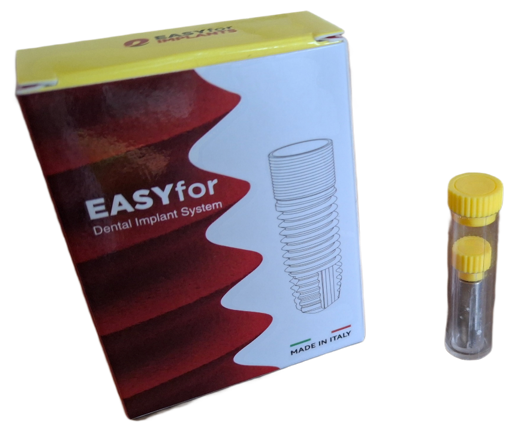
Easyfor entrusts Nobil Bio Ricerche with the packaging processes for each individual implant.
• Packaging in an ISO 7 clean room
• Sterile supply with Easyfor color code
• Double packaging:
– primary container consisting of a neutral POLYCARBONATE vial with a hermetic cap reproducing the color code
– secondary container consisting of a neutral POLYCARBONATE vial with a hermetic cap reproducing the color code with a titanium sleeve containing the implant
– insertion in a transparent medical polythene blister sealed by heat sealing with a label indicating the type of implant, diameter and length, in order to make identification of the product inside the package as simple as possible.
GAMMA RAY STERILIZATION
Easyfor entrusts its sterilization processes to Gammatom.
Gamma radiation is a high-energy electromagnetic wave characterized by deep penetration. Easyfor uses the radioisotope Cobalt-60, the only one used worldwide in photon irradiation processes.
• High penetration allows treatment on the final closed packaging
• No manipulation of products before, during, or after irradiation
• Stable environmental conditions (temperature, pressure, humidity)
• Absence of heat and differential pressures that could compromise the seal of the packaging
• No post-treatment residue
• DNA breakage with consequent impediment to cell replication
• Alteration of the structure of messenger RNA, no longer recognized by receptors
ELIGIBILITY CHECKS
Mechanical and stability tests
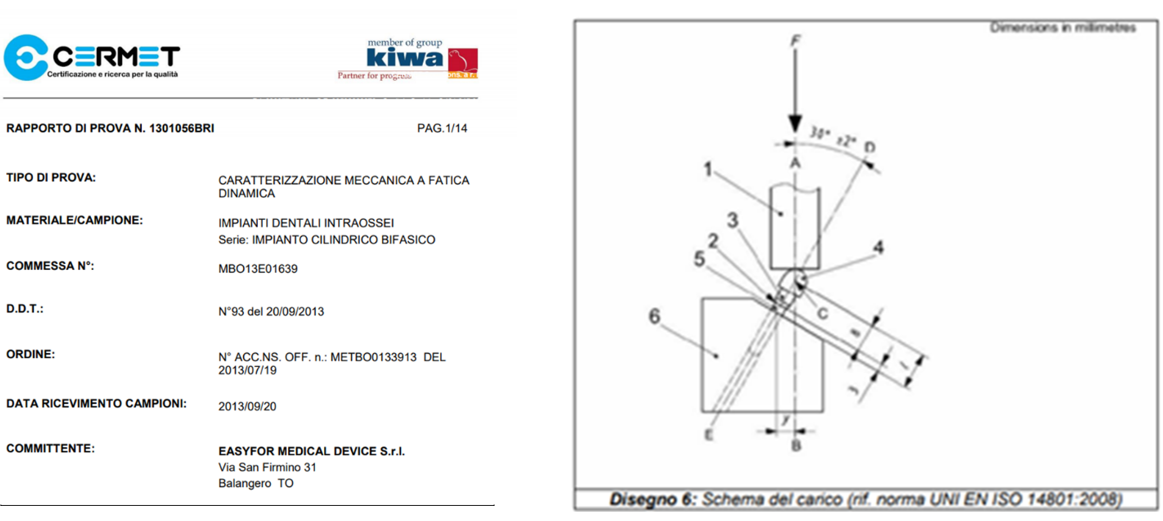
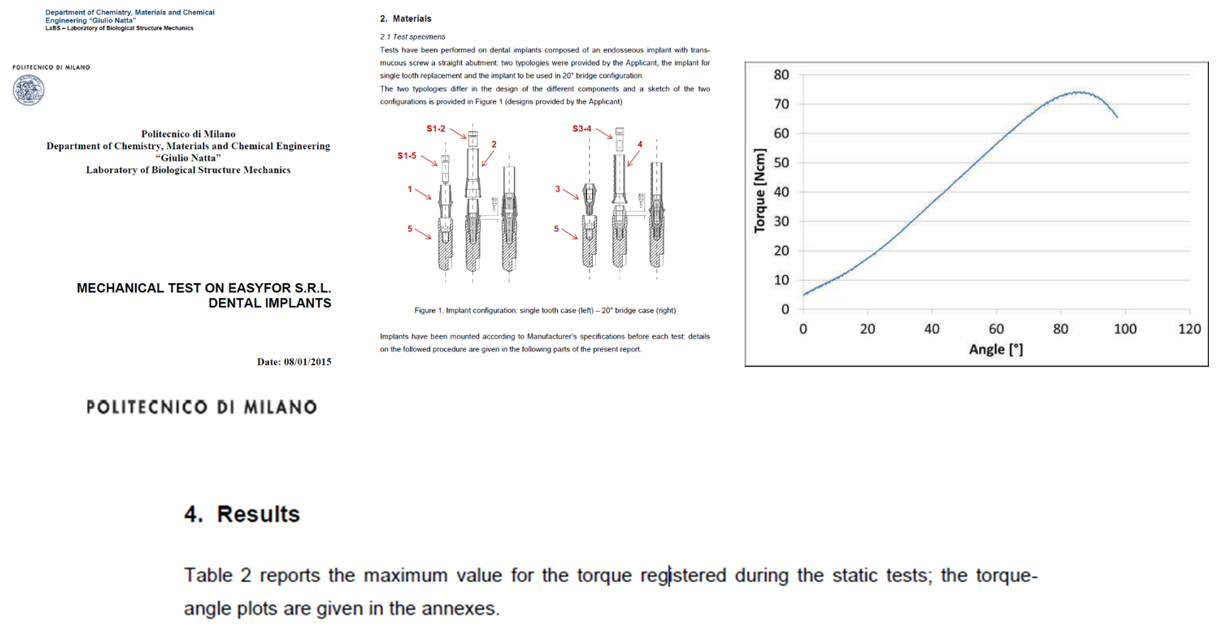
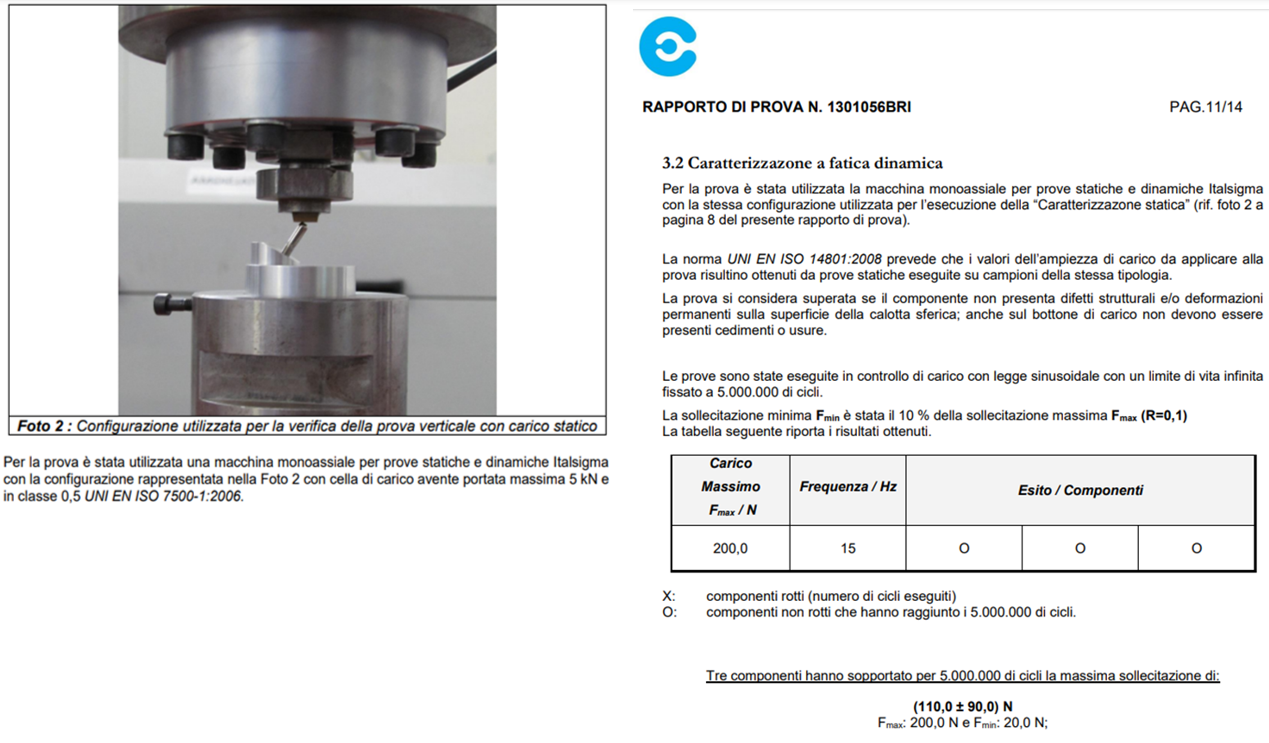
To ensure the durability and longevity of dental implants, Easyfor performs rigorous tests under simulated conditions of daily use.
They evaluate the implant’s resistance to:
• Occlusal forces
• Chewing cycles
• Mechanical torsion tests
To ensure robustness and reliability over time.
Long-Term Stability Testing
• Simulates implant performance under prolonged real-world conditions.
• Predicts durability, stability, and functionality for many years after placement.
Scrivici!
Questo sito è rivolto esclusivamente a professionisti del settore odontoiatrico. Le informazioni presenti riguardano dati, prodotti e materiali sensibili, fondamentali per la tutela della salute e della sicurezza del paziente.
Per accedere al sito, dichiaro sotto la mia responsabilità di essere un operatore sanitario.